Turning a map entry into a practical learning opportunity
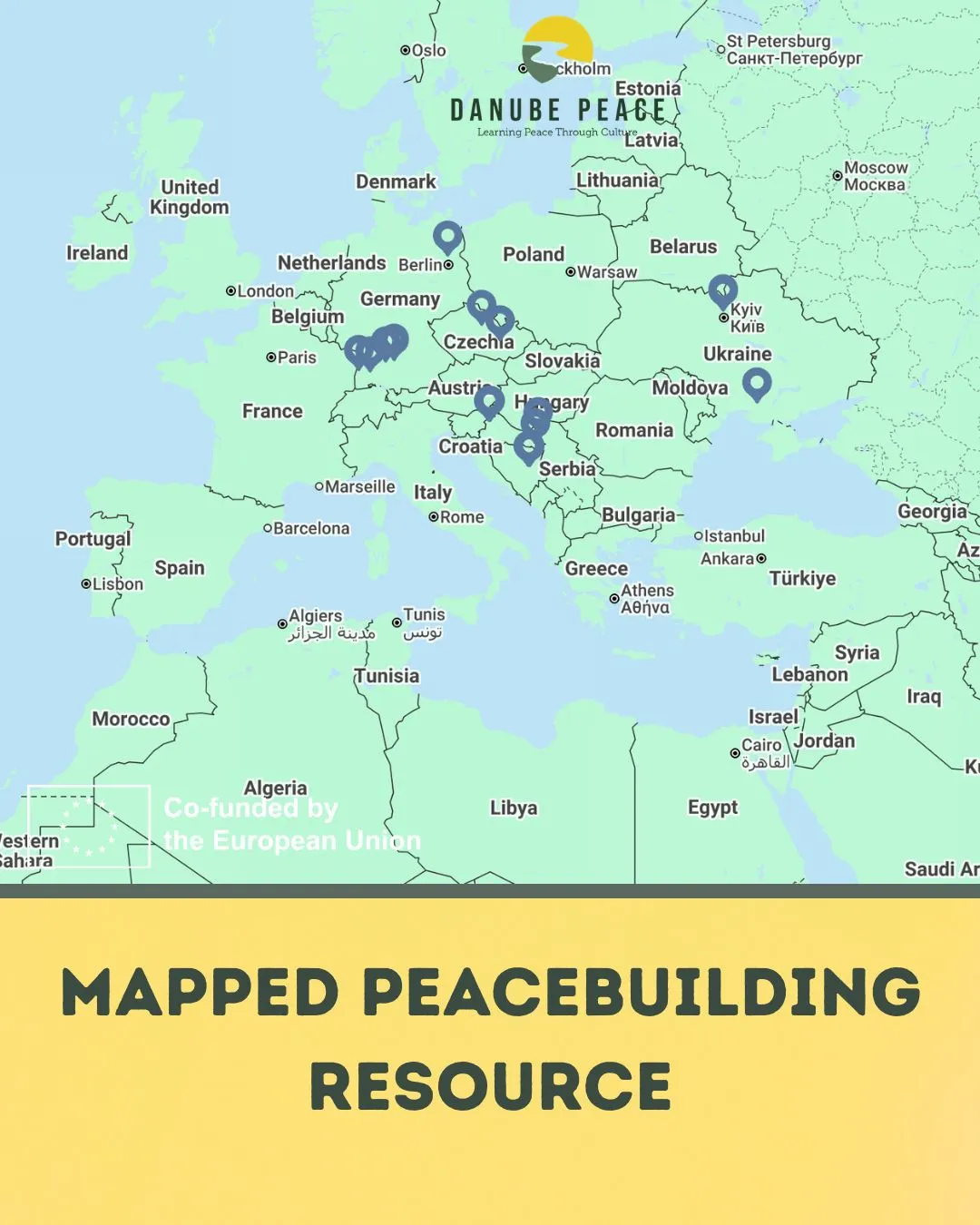
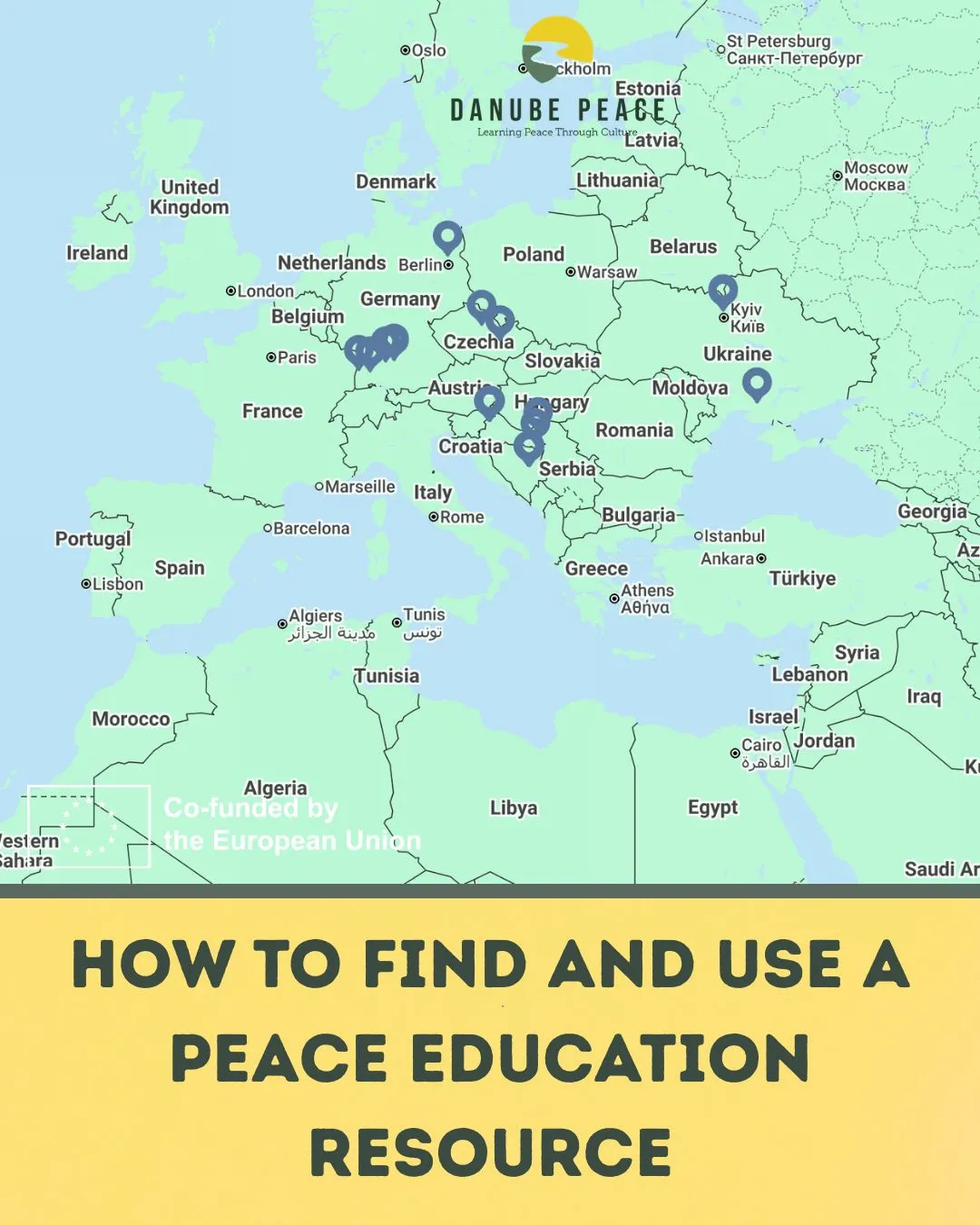
Are you planning a workshop on intercultural dialogue, conflict resolution or community cooperation but unsure where to find suitable educational materials? The DANUBE PEACE Interactive Peacebuilding Opportunities Map can help. Bringing together organisations, initiatives and educational resources from across the Danube region, the map offers a starting point for discovering existing practices and exploring how they might support your next learning activity.
Why mapping peace education resources matters
The DANUBE PEACE WP2 Comprehensive Mapping Report highlights an important challenge: although valuable peace education initiatives already exist, educators and community organisations often struggle to access practical materials and identify opportunities for cooperation.
The report’s Danube Peace Education Roadmap (Section 6, pp. 107-109) identifies a need for more accessible educational resources, stronger regional connections and better visibility of existing initiatives. Its recommendations for educators and cultural actors (Section 7.1, p. 111) also emphasise participatory learning, dialogue and context-sensitive methodologies.
The interactive map responds to these identified needs by making relevant resources easier to discover and investigate.
Exploring a real example: The UNFPA Youth Peer Peacebuilding Manual
One useful entry on the DANUBE PEACE map is the UNFPA Abridged Youth Peer Peacebuilding Manual, listed in Sarajevo, Bosnia and Herzegovina.
This educational publication, developed by UNFPA, provides guidance for youth peer educators and trainers working on intercultural dialogue, hate speech, violence, conflict transformation and peacebuilding. Its 42 pages offer a practical starting point for exploring educational approaches to sensitive social issues.
To find it, open the interactive map, locate the Bosnia and Herzegovina entries and select the manual’s listing. The description introduces its educational purpose, intended audiences and connection to peacebuilding.
The entry includes a link to the original UNFPA publication:
https://ba.unfpa.org/en/publications/abridged-youth-peer-peacebuilding-manual
On the official website, readers can investigate the publication’s background, intended audience and available materials. UNFPA also identifies a more extensive 2021 manual for those interested in exploring the methodology further.
Three steps to finding and using a relevant resource
Step 1: Explore the map with a learning purpose
Visit the DANUBE PEACE Interactive Map and browse the available entries. Start by considering your intended audience: adult learners, young people, educators, community groups or intergenerational participants.
Look for resources that address the topic of your planned activity, whether that involves peaceful communication, cultural dialogue, historical memory or social inclusion.
Step 2: Examine the selected entry and verify its source
Open an interesting entry and read its description carefully. Identify the organisation responsible, its target groups and the educational relevance of the resource.
Follow the external website link to check the original information. For the UNFPA manual, this means reviewing the official publication page and exploring its training themes. Check whether the material is accessible, appropriate for your participants and suitable for your educational objectives.
Remember that a map listing is a starting point, not confirmation that an organisation currently offers a particular activity.
Step 3: Adapt the resource to your learning setting
Consider how the selected material could inform a workshop or group discussion.
For example, an educator could use the UNFPA manual as inspiration for a proposed session on recognising conflict and practising constructive communication. Participants might reflect on the question: How can we respond when disagreement begins to affect relationships in our community?
Such an activity would be a suggested local adaptation, not an activity delivered by DANUBE PEACE or UNFPA. Select appropriate methods, establish respectful discussion guidelines and consider participants’ different experiences.
From discovering resources to taking action
The DANUBE PEACE map is more than a collection of names and locations. It offers educators, cultural practitioners and community organisations a practical way to discover existing knowledge and consider new opportunities for learning and cooperation.
Explore the map, select one resource relevant to your next educational or community activity, and investigate its original source. Consult the mapping report for wider findings and recommendations, then consider how the resource could be responsibly adapted to your participants and local context.
Explore the DANUBE PEACE Interactive Map:
https://danube-peace.eu/en/interactive-peacebuilding-opportunities-map/
Read the Comprehensive Mapping Report:
https://danube-peace.eu/en/comprehensive-mapping-report/

We use cookies to improve your experience on our site. By using our site, you consent to cookies.
Manage your cookie preferences below:
Essential cookies enable basic functions and are necessary for the proper function of the website.
These cookies are needed for adding comments on this website.