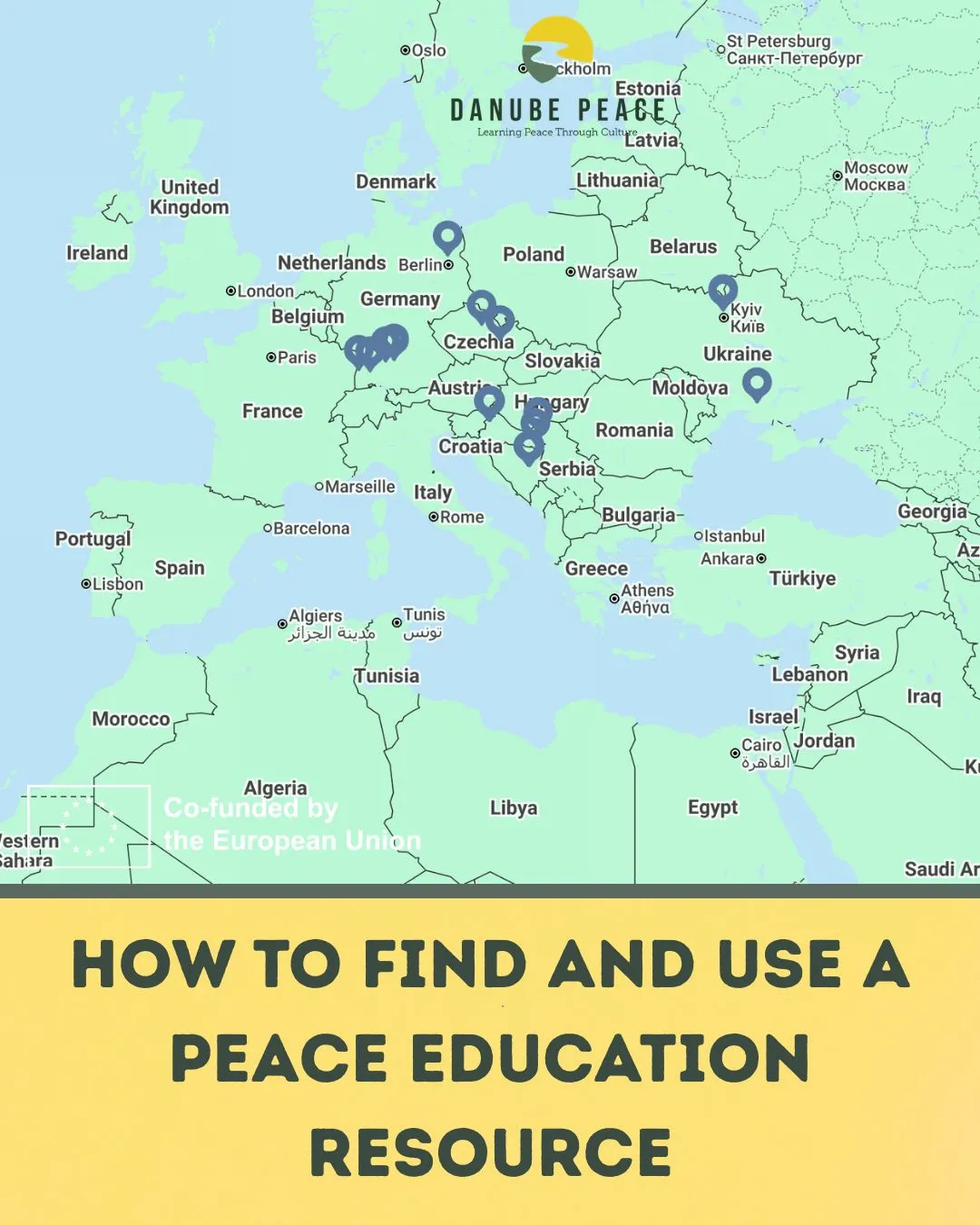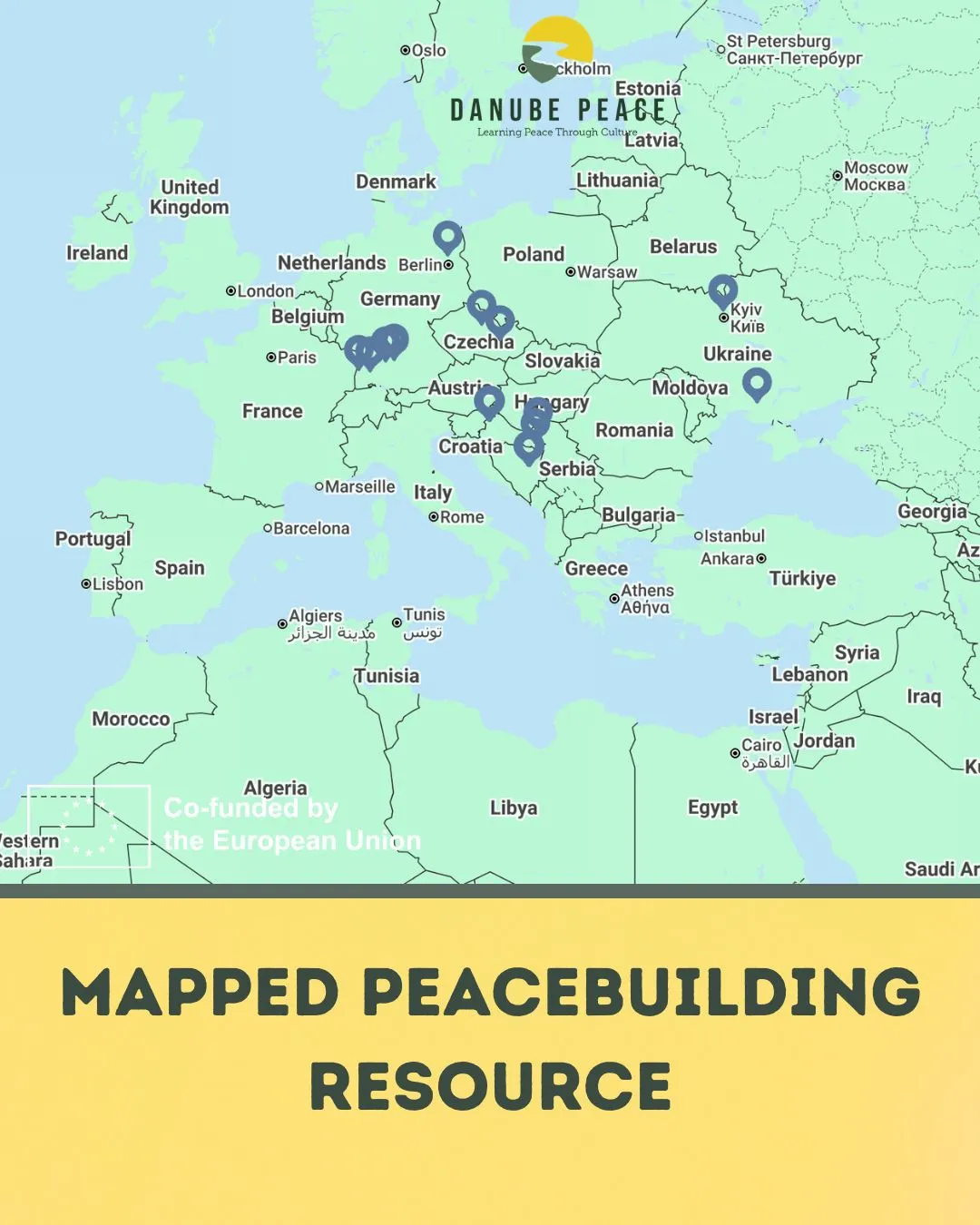
When you sit down to plan a workshop or learning session for adults, finding a good piece of inspiration is often the easy part. But how do you take an initiative you spot on a map and turn it into a real, hands-on learning experience? Discovering a useful resource is just the start but to make it work well in practice, facilitators need to tailor the material to their group’s daily reality, set clear learning goals, and build in dedicated time for open reflection.
The DANUBE PEACE mapping report shows that educators across the region face this exact challenge with taking broad concepts and turning them into practical community activities. Findings from the five national surveys detailed in Section 4.2 (pages 34–56) show that across 150 total respondents, over 90% consider peace education important or very important. Survey findings reveal distinct national realities: respondents in the Czech Republic (17 of 18) and Germany (25 of 27) emphasize educator training shortages and migration integration gaps; in Ukraine (47 of 51), respondents stress wartime trauma and displacement recovery; while in Bosnia and Herzegovina (20 of 21) and Croatia (33 respondents), respondents prioritize overcoming social exclusion, discrimination, and political division. Furthermore, Section 8.1 (page 115) notes that adult educators throughout the region urgently require ready-to-use facilitator guides and adaptable workshop plans.
To see how this works in practice, look at the Mehrgenerationenhaus Eichbergtreff in Ulm, mapped as a resource in Section 4.5.3 (page 83) and analyzed in Section 4.4.3 (page 61), or the Multicultural Center Brusinka in Brno, mapped in Section 4.5.1 (page 81). Eichbergtreff brings people of different ages, cultural backgrounds, and life experiences together through drop-in meeting spaces, language cafés, and shared neighborhood projects. Instead of trying to copy an entire center’s operations, a facilitator can adapt one specific element, like an intergenerational storytelling café, into a focused 90-minute workshop. By choosing a single story or shared neighborhood topic, you create a welcoming starting point where participants can discuss diversity and belonging without feeling put on the spot.
You can follow a simple three-step approach to turn any resource on the map into a practical, interactive workshop:
Turning entries on a map into active workshops helps bring regional research to life in local communities. By adapting proven ideas from fellow practitioners, facilitators can create welcoming, resilient spaces for real dialogue and connection.
Explore the DANUBE PEACE map and choose one resource relevant to your next learning or community activity. Read the mapping report for the wider findings and recommendations. Check the original source and adapt any activity to your own participants and setting.

We use cookies to improve your experience on our site. By using our site, you consent to cookies.
Manage your cookie preferences below:
Essential cookies enable basic functions and are necessary for the proper function of the website.
These cookies are needed for adding comments on this website.